
Please visit the Don Rickert Musician Shop.
Prologue
This first of two articles focuses on the problems many musicians are trying to overcome. The second article will focus on a large number of solutions we have discovered over the years.
Note: The author himself multi-instrumentalist, including fiddle, violin and viola, suffers from artritis, rotator cuff injury and neuropathy.
Introduction 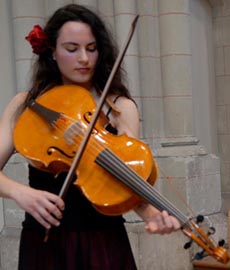
D. Rickert Musical Instruments and its online store, the Don Rickert Musician Shop, have become the "go to" places for the unique, unusual and more than occasionally, the cutting edge. We address "special needs" for musicians.
The phrase “special needs” can have a number of meanings:
- I am looking for a special instrument
- I am looking for a certain sound
- I am looking for a replica of something from a specific historic period
- I want an instrument that is easy to travel with
- Etc.
We get all of the above…we have been doing it for nearly a decade.
Physical Limitations
Increasingly, we are working with musicians who have actual physical limitations and are looking for an instrument that can help fulfill their creative goals. There are a number of injuries and medical conditions that will limit a string musician’s (especially bowed strings) ability to play certain instruments that he or she was previously able to play with no difficulty whatsoever.
These include:
Traumatic Injuries
- Damaged or pinched nerve
- Broken bone in a finger, hand, elbow, wrist
- Damaged rotator cuff (see Mayo Clinic site
- The most common forms of traumatic injury to the rotator cuff are:
- Falling
- Using your arm to break a fall or falling on your arm can bruise or tear a rotator cuff tendon or muscle.
- Lifting or pulling
- Lifting an object that's too heavy or doing so improperly
Problems for Bowed String Musicians
Depending on the nature of the injury, traumatic injuries can affect any aspect of playing a bowed instrument effectively.
Repetitive Stress Injuries
- Damaged rotator cuff (see Mayo Clinic site)
- The risk of rotator cuff injury also increases with age. Rotator cuff injuries occur most often in people who repeatedly perform overhead motions in their jobs or sports. Examples include painters, carpenters, and people who play baseball or tennis.
- Rotator cuff injury is also common among bowed string players, especially fiddlers, who do not tend to follow the rules of posture followed by most violinists.
- Problems for Bowed String Musicians
- Dull ache deep in the shoulder
- Limited range of motion
- Arm weakness
- Arthritis (See Mayo Clinic site for detailed information on arthritis.)
- Arthritis is inflammation of one or more of your joints.
- The main symptoms of arthritis are joint pain and stiffness, which typically worsen with age.
- The two most common types of arthritis are osteoarthritis and rheumatoid arthritis.
- Osteoarthritis is usually caused by normal wear and tear, while rheumatoid arthritis is an autoimmune disorder. Other types of arthritis can be caused by uric acid crystals, infections or even an underlying disease, such as psoriasis or lupus.
- Problems for Bowed String Musicians
- Pain
- Stiffness
- Swelling
- Decreased range of motion
- The location of the arthritis will affect the manner and degree to which the arthritis impacts ability to play one’s instrument
- Carpel Tunnel Syndrome (See Mayo Clinic site for detailed information on Carpel Tunnel Syndrome)
- Carpal tunnel syndrome is a hand and arm condition that causes numbness, tingling and other symptoms.
- Carpal tunnel syndrome is caused by a pinched nerve in your wrist.
- Problems for Bowed String Musicians
- Because carpel tunnel syndrome affects the wrists, it can affect ability to play in two primary ways, depending on which wrist (or both wrists) is affected:
- Ability to hold the instrument
- Ability to bow the instrument
Result of Cancer Treatment
- Lymphedema (See Mayo Clinic site for detailed information on Lymphedema)
- Lymphedema refers to swelling that generally occurs in one of your arms or legs.
- Although lymphedema tends to affect just one arm or leg, sometimes both arms or both legs may be swollen.
- Lymphedema is most commonly caused by the removal of or damage to your lymph nodes as a part of cancer treatment.
- Problems for Bowed String Musicians
- While lymphedema can affect the arms or the legs (usually depends on type of cancer that was treated), lymphedema is particularly problematic when one or both of the arms are affected.
- The problems include:
- Swelling of part of your arm or your entire arm, including your fingers
- A feeling of heaviness or tightness in your arm
- Restricted range of motion in your arm
- Aching or discomfort in your arm
Other Diseases and Syndromes
- Fibromyalgia (See Mayo Clinic site for detailed information on Fibromyalgia)
- Fibromyalgia is a disorder characterized by widespread musculoskeletal pain accompanied by fatigue, sleep, memory and mood issues.
- Researchers believe that fibromyalgia amplifies painful sensations by affecting the way your brain processes pain signals.
- Symptoms sometimes begin after a physical trauma, surgery, infection or significant psychological stress. In other cases, symptoms gradually accumulate over time with no single triggering event.
- Problems for Bowed String Musicians
- The hallmarks of Fibromyalgia, widespread pain, fatigue, sleep deprivation, memory and mood issues all work against musicianship or even the desire to play.
- We have observed this in colleagues and friends suffering from this nasty disease.
- Lupus (See Mayo Clinic site for detailed information on Lupus)
- Lupus is a chronic inflammatory disease that occurs when your body's immune system attacks your own tissues and organs. Inflammation caused by lupus can affect many different body systems — including your joints, skin, kidneys, blood cells, brain, heart and lungs.
- No two cases of lupus are exactly alike.
- Signs and symptoms may come on suddenly or develop slowly, may be mild or severe, and may be temporary or permanent.
- Most people with lupus have mild disease characterized by episodes — called flares — when signs and symptoms get worse for a while, then improve or even disappear completely for a time.
- The signs and symptoms of lupus that you experience will depend on which body systems are affected by the disease.
- Problems for Bowed Strings Musicians
- Lupus has a number of possible symptoms. Those that are most problematic for musicians are:
- Fatigue and fever
- Joint pain, stiffness and swelling
- Shortness of breath
- Chest pain
- Headaches, confusion, memory loss
Infections, Metabolic problems and Exposure to toxins
- Neuropathy (See Mayo Clinic site for detailed information on Neuropathy)
- Peripheral neuropathy, a result of nerve damage, often causes weakness, numbness and pain, usually in your hands and feet. Of greatest concern to string players is neuropathy in the hands.
- Peripheral neuropathy can result from problems such as traumatic injuries, infections, metabolic problems and exposure to toxins.
- One of the most common causes is diabetes.
- People generally describe the pain of peripheral neuropathy as tingling or burning, while they may compare the loss of sensation to the feeling of wearing a thin stocking or glove.
- Problems for Bow String Musicians
- The often-unpredictable onset of weakness, numbness and/or pain due to neuropathy can be extremely debilitating to the musician.
Allergies, MCS (Multiple Chemical Sensitivity) and Related
- Multiple chemical sensitivity (MCS) (See MCS information on Wikipedia.)
- Multiple chemical sensitivity (MCS) is a chronic medical condition characterized by symptoms that the affected person attributes to low-level chemical exposure.
- Commonly accused substances include smoke, pesticides, plastics, synthetic fabrics, scented products, petroleum products, and paint fumes.
- Symptoms include as nausea, fatigue, dizziness and headaches, but also include inflammation of the skin, joints, gastrointestinal tract and airways.
- Headache and fatigue are those most commonly reported.
MCS is not recognized as an organic, chemical-caused illness by the American Medical Association and some other US based organizations. The main reason for this lack of recognition is that the research results are reportedly inconclusive. So, we can anticipate a turn-about when a medical researcher with sufficient skill finally figures out what is going on with this illusive disease.
The medical profession’s failure to understand people’s adverse reactions to minute levels of certain chemicals notwithstanding, many musicians experience all of the symptoms listed above when exposed to many violins and violin fittings (e.g. chin rests).
We believe that this is because the varnish used on most violins, particular those made from the period from about 1780 until the 1950s, contain truly toxic chemicals. The black dye used on fittings such as chin rests is almost always made from nasty stuff derived from crude oil. Until recently, boxwood fittings were colored by “fuming” with nitric acid and ammonia…that is pretty close to what they used to use in gas chambers for executing people! Who knows whether the boxwood colored dye that is now more common is any better or even worse.
Leaving the debate over whether MCS is “real” or psychological exposure to the kinds of chemicals used in the majority of violin varnish since the baroque period is dangerous, contact allergy alone could explain all of the symptoms experienced by some people. Perhaps it is people with MCS who are the first notice that something just isn’t right. To reiterate: nausea, fatigue, dizziness and headaches, but also commonly include inflammation of the skin, joints, gastrointestinal tract and airways. If you have never seen chin rest rash before, you would be appalled!
- Problems for bowed string musicians
- Reach limitations
- Strength limitations
- Fingers
- Wrist or wrists
- Arms
- Shoulders
- Neck
Problems/Limitations related to physique
These are not medical problems; albeit, impediments just the same for many people who are seeking a standard version specific musical instrument that is simply too large or too small for their physique.
- Arms
- Too long or too short
- Hands
- Too small or too short
- Too large
- Neck
- Too long or too short
A common example would be a petite person who wishes to achieve the thunderous sound of a large viola, but only has arms long enough for a disappointingly inadequate child-sized viola.
It works the other way as well. I will never forget the day I met a very large man playing some really fine fiddle music. This was long before the days of custom length strings. He had figured out his own stringing to create a standard-tuned fiddle from a 16” viola. This was the day I became enamored with loud, dark sounding fiddles!
Transfer of skills from one instrument to another
An example of what we are talking about here is someone with, say, a decade or more experience in playing the violin or fiddle, and now wants to play plausible cello, bass or even contrabass parts. She has little interest in spending another decade learning how to handle to bow backwards (at least from the perspective of a violinist or fiddler).
There is Hope!
You did not think that I would write an article about all of the reasons people cannot do something they love, did you. Of course it would be naïve to think that a musical instrument design company can help with all of the issues described above; however, we can and have helped in a number of cases, including cases where the problems to overcome have been quite serious. Fitting instruments to people is what we do.
Read about it in an upcoming article: “Helping People with Special Needs Realize Their Musical Goals: Part 2 of 2”
Related articles


 D Rickert Musical Instruments
Leave a comment